Friday, 25 April 2014

Personal Review of the Second Year

The primary purpose of a university is the advancement of knowledge. Whether this means educating about pre-existing knowledge or advancing research.

With this in mind, what I want to get out of my time at University is not just existing knowledge but the ability to develop said knowledge further to be a more effective game artist.
When I leave University I hope to be able to get a job, but that is mostly out of necessity. If I feel my work still isn’t up to industry level I will want to keep furthering my learning for a better portfolio. Of course even in industry I will need to keep learning to keep up with advancements in technology and ensure I am the best I can be at what I do.

Now that I am almost at the end of year two, I do feel like I am starting to really get the hang of all the software and their best uses. I’m quite proud of several of the models I produced this year. Of course, I still have a long way to go.
Currently I think that aspects I particularly need to improve on are effective use of textures and my speed in creating them. I have found that this year I have improved significantly with modeling speed, starting to effectively use modifiers and understand the importance of modularity.

Year 1 Vehicle Project VS Year 2 Vehicle Project

On top of this, I’m starting to gain a better understanding of the conditions I work best under and things that help me learn. Especially in the latter half of the academic year, my productivity had increased an awful lot due to my improved routine and time management. Plus as a side effect of this other aspects of my life such as diet and sleeping patterns have improved too.

This year has had a lot of challenging times, especially early on, as I’ve had to learn my best approach to each project through trial and error. One thing I realized I had a big problem with was allocating time to different stages of a project. This was particularly evident with the building front project, where the total time I spent on it was more than enough, but too little of that time was spent on the texturing as I was too focused on getting the mesh perfect.

The building project. Too much time wasted on the details, but the potential was there.

Balancing multiple projects at once still can cause some problems and it is a challenge having to decide on the priority of different tasks, but I consider this to be an important life skill that I just have to learn.

Over summer I want to take a lot of texture photos and compile more tillable textures from these photos. I also think it might be a good idea to set myself some small projects just to keep things I have learned fresh in my mind over those four months, and to make re-starting at the beginning of year three less of a shock to the system.

At the moment I have very little work that I feel I can put in my portfolio, so I am looking forward to the FMP where I hope to produce something of value. So far my experience in Uni has been primarily to practice and advance my skills so I know they aren’t my absolute best. When I leave Uni I want to have produced something I am proud of so I can show potential employers (and myself) what I can really do.

Life Changing or Career Building?

In an industry that is constantly changing, how can game art students be best prepared for their future roles? We cannot afford to overspecialise, leaving weaknesses in our skillsets. The government has some argument with the idea of focusing on the teaching of specific useful skills to raise employability- students will inevitably have some decent core skills already due to entry requirements at universities etc. However, those skills will degrade over time without focus, and then what about when the advanced skills become obsolete? Some companies acknowledge the importance of a varied skillset and hire based on that judgement, but then surely they’ll find those employees to be lacking in expertise?

The obvious answer is to teach a bit of both. You can bet that the government is no expert on the industry and doesn’t have quite the full grasp on the range of skills that could potentially become essential in years to come. Plus, while developers may advertise that their priority is those of a liberal arts background (supposedly their idea of a well-rounded individual) you can be certain that they want advanced, specific skills on top of this. Any way you look at it, it’s good to have a fair grasp on some industry practices anyway just to save them from being such a shock to the system. But how do we find the balance?

It all comes back to something similar to the idea of a T-shaped skillset. Teaching basic skills alongside the specialised ones in a way that supports them is a good method. The deeper issue is when it comes to the specifics, how do we ensure than teaching remains relevant? The unique thing about game art and courses in similar fields is that the curriculum will always need constant updating to keep up with what students need to know. “We’re developing systems and processes, and we get to iterate on them semester after semester” –Richard Lemarchand, professor at University of Southern California. It’s wholly possible that industry practices will change as students are being taught them, and keeping the curriculum as up to date as possible may require the occasional bit of new blood, permanent or otherwise. Here at DMU we often have guest lecturers and it works wonders for keeping industry knowledge up-to-date.

The most important and effective way to future-proof students for changes is already a key element of higher education- to teach students the all-important skill that is learning. Keeping students interested in the workings of the industry so they’ll keep up with news in their own time is a good start. Keeping good communication is helpful for this too, not just between the students and lecturers but between the students themselves too. A surprising amount of the knowledge gained on a course will come from other students.


All in all, the best way for game art to be taught is a combination of experience, both core and specialised skills and the encouragement of independent learning for when situations change. Students should know to be adaptable, but being best prepared for whatever happens in the industry is always a good start.


Creativity, the Talent Myth and Craft

Everyone can be creative to some extent. The world isn’t 90% made up of Emmet from The Lego Movie (although I for one thought the double-decker sofa was a great idea). What makes especially creative people stand out is their ability to demonstrate their skills that they have built off their talent.

There has always been some debate as to the overall effects of natural talent on skill. I’ve seen that most people at a certain skill level will, when asked, respond that skill has nothing to do with anything, that it’s all practice, practice, practice. But really, the interest someone has in a particular creative outlet is going to inevitably be enhanced by their natural affinity for it. In education, people tend to shy away from less “academic” subjects because we think there are no jobs in the creative sector, but creative fields are incredibly important. “Creativity is as important as literacy”, says Ken Robinson in his talk about creativity and education, and “If you’re not prepared to be wrong, you’ll never come up with something original”. This is one way the rigid structure of education can even have a negative impact- creativity is hard to learn, but easy to discourage.
"All children are artists. The problem is to remain an artist once he grows up"- Pablo Picasso

Personally I think that in lower levels of education when it comes to art there is often one of two problems- the curriculum either focuses on skill without creativity or creativity without skill. To become a good designer you need both, so those with a talent for it who are inevitably more likely to gain knowledge in their own time are going to get a head start for when education becomes more relevant at higher levels. Of course people who are very driven individuals will also be able to achieve this even from starting at a low level of skill, but really being motivated is a talent in itself.

In the games industry, creativity is important for almost every aspect of development. However, the amount of creativity a position will utilise can sometimes be quite small, especially in large companies and more subordinate positions.  A lot of the time you will be given a brief that is extremely strict and allows for little creative input. Of course having too little guidance on a project is generally bad since it can be hard to find a starting point, and can even start to cause worry about being wrong which of course ends up actually hampering creativity. But for creative types being too confined by a brief can get frustrating, and some may find this difficult.

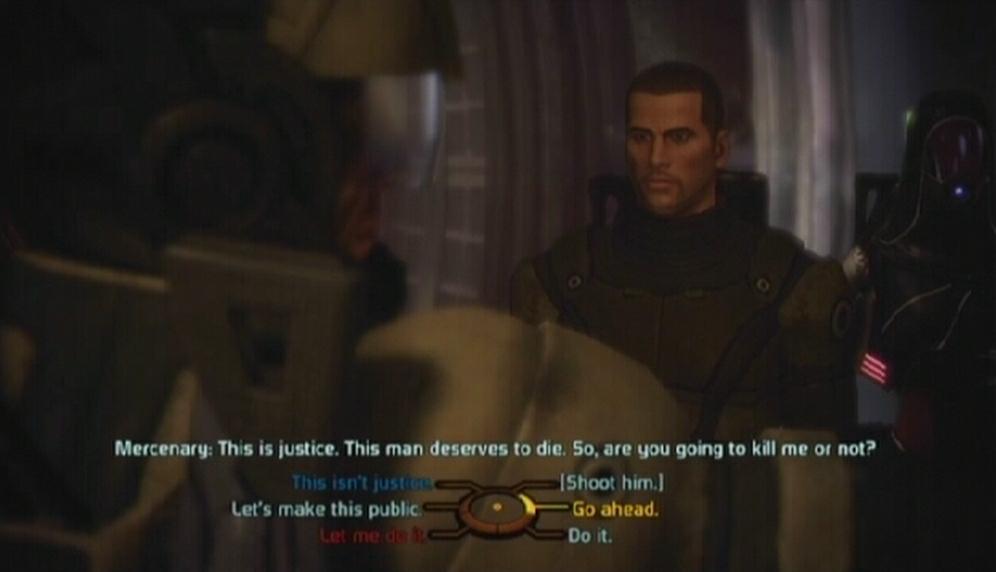
Creativity is most important in making elements of games individual and iconic when compared to similar titles. This goes for all elements- gameplay, visuals, or story. Consumers have little reason to take notice of a game if it doesn’t bring something new to the table or have some kind of individual hook to it. Everyone recognises TF2’s art style, everyone remembers Mass Effect’s dialog wheel etc. While it is true that gameplay concepts thought of as innovations can backfire and ruin games, the risk can be worth it. It only becomes a problem when developers forget why elements that have become staple work the way they do.


As for my own creativity, when I was younger I was told often that I had talent to encourage me but of course now everything is all about skill. Plus I now have to branch out from simply drawing and develop more skills that complement each other in the industry such as 3D. My affinity for art as a child has boosted my skill level, but now it all comes down to hard graft if I want to bring these skills up to a level that is useful in the industry.

An Introduction to the Game Industry

In today’s industry it is very important to be flexible in the work you can do. People talk about having a T-shaped skill set- specialising in one area but ensuring you are adequately trained to do other tasks comfortably. This is especially important with the rise of indie and mobile studios who work in smaller teams. Of course it is also helpful knowing the exact way to produce your work so that others who have to handle it don’t have any problems.

Getting into the industry often involves building up connections and making a name for yourself. Some people try and use other jobs within the industry such as game testing as a stepping stone, but really testing is a separate department of the industry relying on writing more than art. Getting a relevant degree is a plus, but when it comes down to it, it’s all about showing that you have the skills needed. The more you want to “move up” in the industry the more different skills you’re going to need to master.

Even then, in today’s industry you’re unlikely to be specialising unless you manage to be employed by a major studio. In the cases where you will be specialising, most of the jobs are in environment art. A lot of people have the main aspiration of becoming a Concept Artist, but there are relatively few positions in the industry, and most concept artists would’ve originally worked on 3D content. Some people put a lot of 2D work in their portfolios, but this can be risky since the bar is set so high in that department. For your portfolio you need to make something, mods, items for existing games, just samples of the best you can do. Then comes the networking. Nobody is going to care about you and what you’re doing until your work warrants that notice. Of course if you’re applying for a mobile or indie studio, cover as much as possible, in an appropriate style of course. Even spread to designing things like the UI for a game, because it’s a huge part of mobile games yet something so few people focus on.

However the industry is not limited to departments within developer studios. As the cost of developing major titles continues to increase, it’s becoming all the more commonplace to outsource elements, often to countries where labour is cheaper. Sometimes companies will even look to other developers to speed up development for meeting deadlines. Small teams often hire individual freelancers if their own combined skillsets do not cover every aspect of a game’s development. The only drawbacks of outsourcing this way can be potential issues with communication and/or quality control, especially with large projects.

It is completely viable to become a freelancer and it has several benefits, such as removing the need to commute regularly. Gaining the initial reputation may take some work, but there exist agencies to assist in finding assignments. Freelancing is not for everyone though. Many don’t have the networking skills, plus working from home can be very difficult. It completely removes the social aspect of a studio, and keeping a work mentality in your own house can be a real challenge.

All in all, the games industry has more ways to enter than ever before, but this means nothing if you can’t prove yourself to be exactly what a developer needs. Pay close attention to the size of a company and the content they are creating before you choose exactly what to show.

References- https://www.youtube.com/watch?v=wdZUZ73zLWc

Elements of Game Technology- Interaction Design

How we interface with games has changed a lot over the past few years and is continuing to change in exciting ways. As the seventh generation consoles are being weeded out and the eighth generation begins forcing on us many new-fangled gimmicks, how much of their innovations do we need? How beneficial are they?

The PS4’s Dualshock 4 controller continues with the trend of utilising motion controls, but adds a touchpad to add in new ways of interaction. This of course isn’t a new thing in the industry but the design of it is quite unobtrusive, something that is more important than you’d think- just look at the Wii U.


The Wii U is currently not doing as well as Nintendo would’ve hoped. The original Wii was a huge success with its motion controls appealing to many different kinds of people, and not only gamers. The new entry uses the same controllers with the addition of a large tablet controller with a huge touch screen. The ability to play games solely on this screen is very interesting, and it really does add a lot to interaction in party games. However, this controller takes up a lot of space and doesn’t look massively appealing either- I know my main reason for not wanting a Wii U was having to put up with that controller.

Then there’s the Xbox One and the infamous Kinect. Making it mandatory was certainly an unnecessary move, but fortunately it isn’t being too much of a deterrent. The technology of course is not new, but it has been much improved from the previous generation, with the voice controls being far more accurate. It’s not perfect but there’s still room for the technology to advance. For actual gaming though there’s very little need for voice controls. I’ve played PC games before that used them and opted out in favour of regular button pressing.

PC gaming is much the same as it’s always been, many people opt to use controllers (generally the Xbox 360 gamepad is the most popular) but the keyboard and mouse setup always has its benefits. There is little change other than maybe the increasing popularity of mechanical keyboards for accuracy’s sake.

But now we get to the fun stuff- the future stuff. Namely the Oculus Rift. Recently bought up by Facebook in a move that’s not pleased many fans and investors, the second version of the Oculus’ development kit has just recently been announced. DK2 has a higher resolution of 960x1080 for each eye and lower persistency to combat motion blur. On top of that the head tracking has been improved and the control box removed. Sony is also developing its own VR headset titled Morpheus, but whether the industry has room for multiple competitors in this particular market only time will tell.


As additional peripherals start being developed for this new technology, such as multi-directional treadmills for walking and motion sensors to remove the need for a gamepad, it’s exciting to see how immersive the technology can become. That’s what it comes down to really- a good method of control should keep you immersed in the game, and I’d say it doesn’t get more immersive than this. There have been so many failed attempts at virtual reality in the past; it’s about time we got it right.


Elements of Game Technology- Sound for Games

Sound is something that can make or break a game for me.
As I’ve mentioned before when I wrote about level design, audio cues can be used to lead the player and to make environments more believable. Pickups should make appealing sounds when you get them and enemies should sound the way they look, whether that be scary and alien or something more quirky. Plus there’s nothing quite like the level up “ding” to alert you that you’re doing well, or doing awesomely (see Wildstar).
But if there’s one thing that can always enhance a game for me it’s good music. Nothing makes me more excited for a boss battle than the promise of some good upbeat or intense music. Nothing disappoints me more than a boss with some generic orchestral piece in the background with no real hook to it. This might just be my opinion, but if there’s one thing the whole trend of making games more ‘cinematic’ has been bad for its letting the drama overshadow the melody.

I’ve referenced this game countless times already, but I feel Metroid Prime is a very appropriate title to reference here not only because of its great sound design but also because I often write these blogs with music from the game playing in the background. Music from this game (mostly composed by Kenji Yamamoto) is enjoyable to listen to and appropriately alien sounding, but not distractingly overpowering. It sounds like it’s just oozing out of the environment, being made by all of the flora and fauna and everything in your surroundings. Compare it to the music in Other M where almost all of the music was limited to traditional orchestral instruments and nothing stood out.
The boss themes are similarly alien sounding, while more upbeat with powerful chords and distinctive tunes. One of my favourite pieces of video game music is the theme for the Hive Totem, a small miniboss near the start of the game. I remember it from back when I first played the game- for some reason it stuck out to me. That’s what good music should do, turn something that wouldn’t ordinarily make a huge impact into a memorable experience.


Of course music doesn’t have to blend in, it can be a main feature. I found that the first time I played Super Hexagon I wanted to keep trying to get further just so I could hear more of the music, and it was really exciting. The graphics are very simple, and extra colour and movement only exists to support the music as the shapes pulse to the beat and the colour changes hue like disco lights. Music with a good beat works wonders for fast paced games like this, and Chipzel’s work is a perfect fit.
Hotline Miami is similar, with its need for quick reflexes, retro music, colour changing background and the way you can restart in a split second after death. This game chooses to have the music continue playing even when you die so it doesn’t become repetitive, and this works very well in preventing death from becoming more of an annoyance than is necessary. Super Hexagon manages to do this too, despite having the music stop and start upon death by having the music start up from different points in the song, while staying away from the most intense parts to leave them as reward. This makes the tune seem newer for longer and prevents restarting from feeling too repetitive.


As a final note, there’s nothing more exciting than an important boss having a proper song with lyrics as its theme song- even more so if it is an improved version of a song earlier in the game and/or the title theme. Key things to consider with this though are repetitiveness and of course how appropriate it is for the situation. My favourite examples of this would be the final boss of Sonic Adventure 2 playing the full version of the title theme, and the final boss of The World Ends With You using a remix of several different songs from earlier in the game.


All in all, I think the most important factor in game music composition is making things memorable. Fitting music will always make a huge difference in the atmosphere of a level or boss and will affect the mood of the player significantly. Get it right and it’ll make all the difference.

Elements of Game Technology- Game Engines

There are countless different game engines out there, all with their own unique features, comparable strengths and weaknesses. Not all are named or known to the public of course, if a developer has something special they might want to keep that advantage to themselves. I visited EGX Rezzed the other week and my friend was asking a developer about the engine running Infamous- Second Son. They couldn’t say anything about it, only that it was their own engine. It wasn’t a surprise that they were keeping things hushed, it looked absolutely stunning!


But there are plenty available to use and many even that are free, at least for non-profit content. Here are a handful of the more notable examples.

Let’s start with Epic Games’ Unreal Engine. UDK is one of the most widely used engines has just recently had its fourth version released. It can be used for practically any game genre, with many developers modifying it to suit their needs. It is easy to use with the way it visually displays assets and it supports all kinds of plugins. Unreal Engine 4 even allows you to change code while the engine is running.

Crytek’s Cryengine is well known for its ability to handle graphically intensive and complex levels very well, with advanced lighting and physics algorithms built in. A key selling point is how it can be used to develop games for multiple platforms simultaneously, with various useful features such as controlling texture size for each platform. At this time it is mostly used for FPSs and action games, most of which being in a realistic visual style to take advantage of the engine’s main strengths, but there are some more stylised titles too such as the upcoming Sonic Boom. The engine is currently in its third version with the fourth instalment in development, though it has been said that the new version will be completely different to those before it.

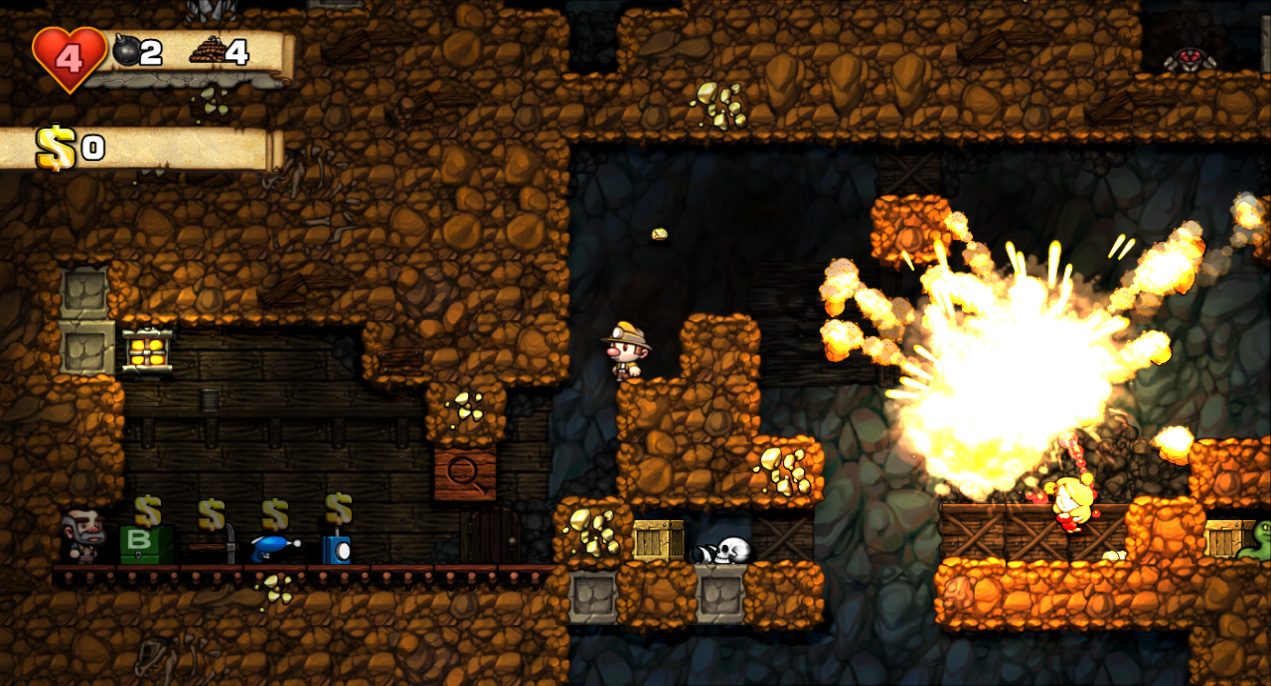
One engine I was surprised so see so many people singing the praises of online was YoYo Games’ GameMaker. I remember using GameMaker many years ago for fun, creating some admittedly terrible stuff but really enjoying myself. Built for novices and professionals alike, the most basic version can be used for free. It allows for either quick drag-and-drop style programming or simple written coding in Game Maker Language. This engine is perfect for 2D games, with only support for very basic 3D. There have been some quite high-profile indie games built in this engine over the past few years such as Hotline Miami and spelunky.


Unity is a fairly well-known engine originally developed for Mac then made for other platforms after becoming popular. It can be used to make games for web and mobile platforms such as Android and IOS as well as PC and consoles. This feature makes it highly accessible in today’s industry as phones are continually becoming more powerful and developing a flourishing games industry of their own. Games made in this engine are usually stylised, since it usually gets overshadowed by competitors with slightly more advanced algorithms when it comes to realism. However Unity 5 is due to be launched sometime soon, with high end shaders and more complex physics.


Though these are only a few examples of the most accessible engines, it’s easy to see how so many engines are deemed viable for all kinds of purposes. With the engine playing a huge part in bringing assets to life, I’m excited to see what exciting new features engines can bring as they get access to more powerful platforms.